
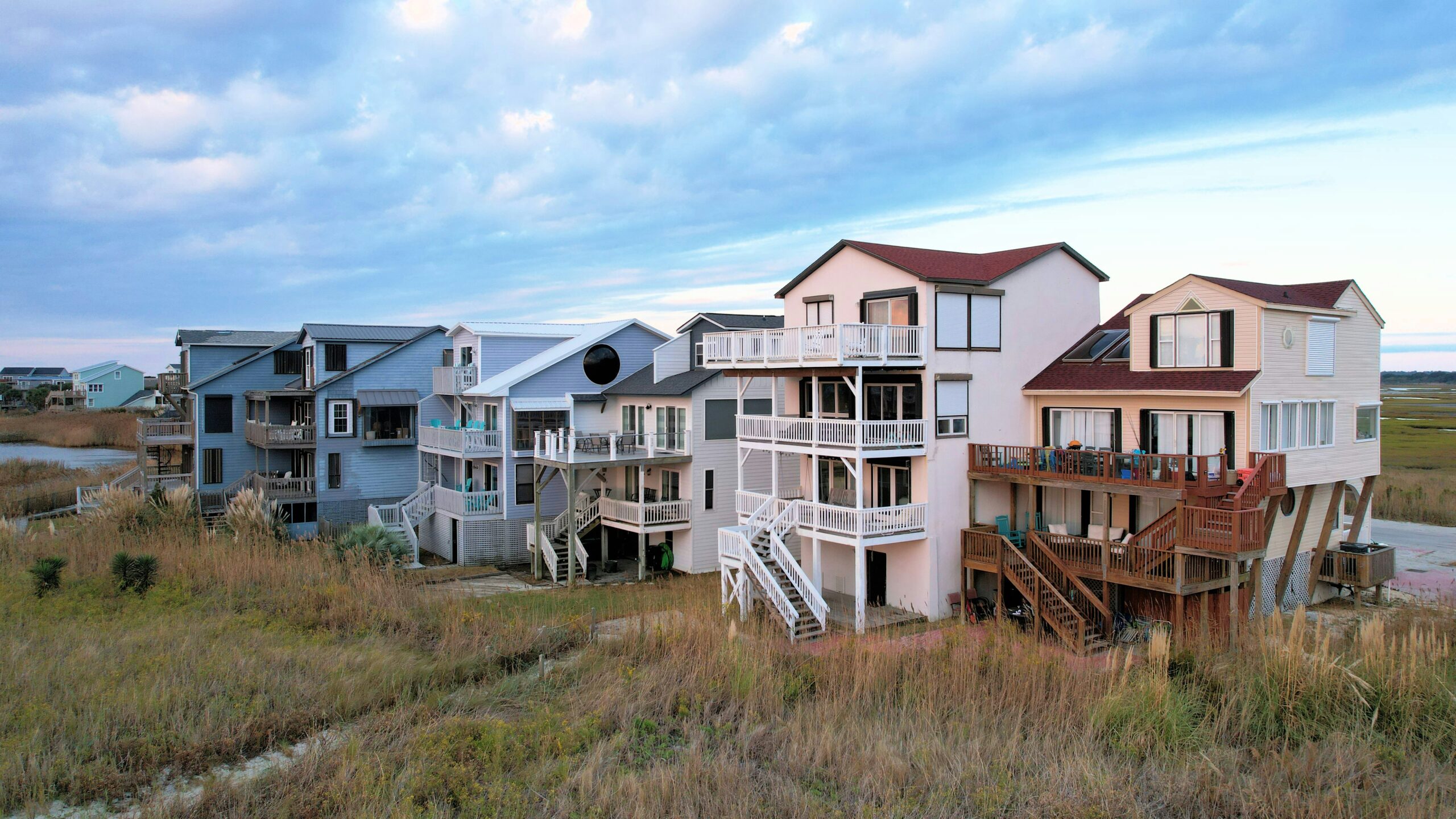
North Carolina has become one of the more attractive fix and flip markets in the Southeast, and the fundamentals behind that reputation are durable. Raleigh, Charlotte, and Durham anchor strong demand, but smaller cities and towns throughout the state still offer older 1–4 unit housing stock at accessible prices. Job growth, steady in-migration, and a healthy rental market support both flips and small infill projects across a range of price points.
The trade-off is a state with a genuine statewide GC licensing system, a residential code that clearly covers 1–4 unit dwellings, and a hard money environment built around ARV caps and experience tiers. Investors who treat North Carolina as loosely regulated tend to find out otherwise mid-project. Here’s what to understand before you start.
Key Things to Know Before You Start
General contractors are licensed at the state level, with a specific residential classification for 1–4 unit work. The North Carolina Licensing Board for General Contractors issues licenses across several classifications. The Residential classification covers all construction and demolition activity for residential units governed by the NC Residential Building Code, including site work, driveways, sidewalks, and water and wastewater systems, plus specialty trades like insulation, masonry, roofing, and interior construction when performed as part of those residential projects. A residential contractor is specifically authorized to construct, manage, or supervise single-family, two-family, and multi-family homes up to three stories.
License limitations cap job size — and the cap matters. North Carolina GC licenses carry financial limitations: Limited, Intermediate, or Unlimited, each tied to working capital, net worth, or approved surety bonds. These limitations control the maximum dollar value of individual projects a contractor can legally take on. Investors need to confirm that their GC’s limitation level comfortably covers the full rehab budget including contingency — not just the base scope.
Getting licensed is a deliberate process, not a quick checkbox. Applicants must be at least 18, provide three character references, demonstrate financial stability through working capital or net worth statements or surety bonds, and register their business with the NC Secretary of State. After submitting an application and fee, the NCLBGC typically takes 30 to 60 days to review before an applicant can sit for exams. Investors planning to act as their own GC need to account for that timeline well in advance.
The Residential Code now consolidates requirements for 1–4 unit dwellings in one place. Recent updates brought construction requirements for 1–4 unit dwellings into the North Carolina Residential Code, creating a single code source for these structures and reducing confusion about which standards apply. Inspectors, design professionals, and building officials now work from a unified standard for small residential projects including townhomes and small multifamily up to four units.
Permits are required for most meaningful work, with a statutory backstop for delayed plan reviews. Under G.S. 160D-1110, no person may start construction, alteration, repair, or demolition of a building without first obtaining a permit — with narrow exceptions for work costing $20,000 or less that doesn’t affect structural integrity or key systems. Importantly, if a local government chooses to review residential plans under the Residential Code, it must complete initial plan reviews within 15 business days of submission. If it doesn’t, applicants can pursue third-party review at the jurisdiction’s expense. This gives investors a meaningful backstop against indefinite plan review delays — though it’s a safety valve, not a default assumption.
Hard money leverage is competitive but constrained by ARV. North Carolina fix and flip programs commonly offer up to 80 percent of purchase plus 100 percent of rehab for first-time investors, and up to 90 percent of purchase plus 100 percent of rehab for experienced operators, with loan sizes from $50,000 to $3 million. Rates typically run 10.5 to 11.25 percent interest-only, with origination fees from about 1.5 to 2.99 percent and 12-month terms. Behind those numbers, lenders still cap overall exposure against ARV — deals that only pencil at thin margins remain fragile when appraisals come in below projection.
Down payment and experience requirements are real. Most investors need to bring 10 to 20 percent down, with leverage increasing as completed projects accumulate. First-time flippers start at more conservative LTC tiers, while experienced operators with strong track records qualify for higher advance rates and less cash required at closing. Credit profile, ARV support, and exit strategy all feed into how lenders size and price individual deals.
Permits, Inspections, and Timelines
North Carolina’s permit framework is defined by state statute but administered by local governments. The permit requirement under G.S. 160D-1110 covers construction, reconstruction, alteration, repair, movement, removal, and demolition — with a narrow exemption for work under $20,000 that doesn’t affect structural integrity, load-bearing walls, fire-resistance ratings, or key systems. Most substantive fix and flip scopes fall well outside that exemption.
The 15-business-day rule for residential plan review gives investors a tool for managing stalled reviews. If a local government misses that deadline, applicants can request third-party review by a certified Code Enforcement Official, which the jurisdiction must accept and allow work to proceed, then either issue the permit within three business days or issue a written denial. In practice, investors in Raleigh, Charlotte, and the Triangle plan for several weeks from complete submittal to permit issuance and use the 15-day rule as a backstop rather than counting on it as the standard turnaround.
Standard inspections follow the familiar pattern: footing and foundation, framing and rough-in for electrical, plumbing, and mechanical, insulation, and final. Weather delays are less severe than in northern states, but jurisdictional backlog and re-inspection timing still affect schedules in busy growth markets. Building buffer into loan term assumptions is standard practice regardless of how favorable the climate looks compared to other regions.
Partnering with a draw-friendly lender, like the ones found on Lenderly, ensures you have access to secure and timely remote virtual inspections, effectively eliminating many of these issues.
Working With Contractors
North Carolina’s GC licensing is centralized through the NCLBGC, which means the verification process is consistent and the information is accessible. The Residential classification covers the full scope of 1–4 unit residential construction, including specialty trades performed as part of those projects. Specialty trades — electrical, plumbing, mechanical, HVAC — hold their own separate state licenses.
Before signing with any contractor, verify the license number, classification, and limitation level with the NCLBGC, and confirm the contractor is currently in good standing. Make sure the limitation level comfortably covers your full rehab scope including potential change orders — a contractor whose cap is too low for the actual project size creates compliance and liability exposure. Confirm that specialty trade contractors hold appropriate state licenses.
Use contracts with detailed scopes, clear timelines, and milestone-based payment schedules tied to passed inspections. In a state where licensing is centralized and enforceable, documentation that establishes what was done, by whom, and under what permits provides meaningful protection at resale.
Financing Your Project
North Carolina has an active hard money market focused on 1–4 unit residential properties and small multifamily. Representative programs offer fix and flip loans from $50,000 to $3 million, with interest rates ranging from 10.5 to 11.25 percent interest-only, origination fees starting around 1.5 percent, and no prepayment penalties on most products. These loans are made to LLCs or corporations without requiring personal income documentation — underwriting is asset- and sponsor-based.
Standard requirements include a 10 to 20 percent down payment, a detailed rehab budget, ARV supported by local comparable sales, and documented reserves for carrying costs and contingencies. DSCR rental products are widely available for investors planning long-term holds, with 30-year terms, up to 80 percent LTV, and rates around 6.25 to 7.99 percent. Ground-up construction financing is also available, typically up to 75 percent of purchase and 100 percent of construction costs.
Realistic ARV and budget assumptions matter more here than in markets where lenders are more aggressive. Deals modeled on best-case projections tend to encounter lender scrutiny — or come up short when appraisals land below expectation.
Common Mistakes to Avoid
Skipping or downplaying GC licensing is the most systemic compliance risk in North Carolina. Investors who act as de facto GCs without proper licensing, or hire contractors without verifying their credentials, face enforcement exposure and difficulties with permits, inspections, and insurance when problems arise. Using a contractor whose license limitation is too low for the actual project size is a closely related issue that creates compliance and liability problems, particularly if disputes lead to board or legal scrutiny.
Assuming permits are optional for rehabs that feel “small” is a recurring mistake. While state law does create a narrow exemption for limited low-cost non-structural work, most substantive rehabs — structural changes, new habitable space, major system work — require permits. Treating wall removals, basement finishes, or significant mechanical upgrades as permit-free work leads to failed buyer inspections and forced corrections.
Assuming the 15-day plan review rule means permits in exactly 15 days — without accounting for corrections, resubmittals, and inspection backlogs — still produces schedule slippage on projects with tight loan terms. And over-leveraging based on the high-end marketing figures rather than the actual ARV-constrained ratios lenders apply is a consistent way for otherwise solid North Carolina deals to come up short of funding at closing.
The Bottom Line
North Carolina offers a strong and growing market for fix and flip and small residential development, with demand fundamentals that show no signs of slowing. Investors who respect the statewide GC licensing system, understand permit requirements under the Residential Code and G.S. 160D-1110, and structure financing around conservative ARV-driven hard money norms tend to see smoother projects and more predictable exits.
Verify contractor classification and limitation level with the NCLBGC before you commit to a project, confirm permit and inspection expectations with local building officials, and model returns with realistic ARV and leverage assumptions rather than best-case marketing terms. With that approach, North Carolina can become a repeatable, scalable market rather than a series of individual bets.