
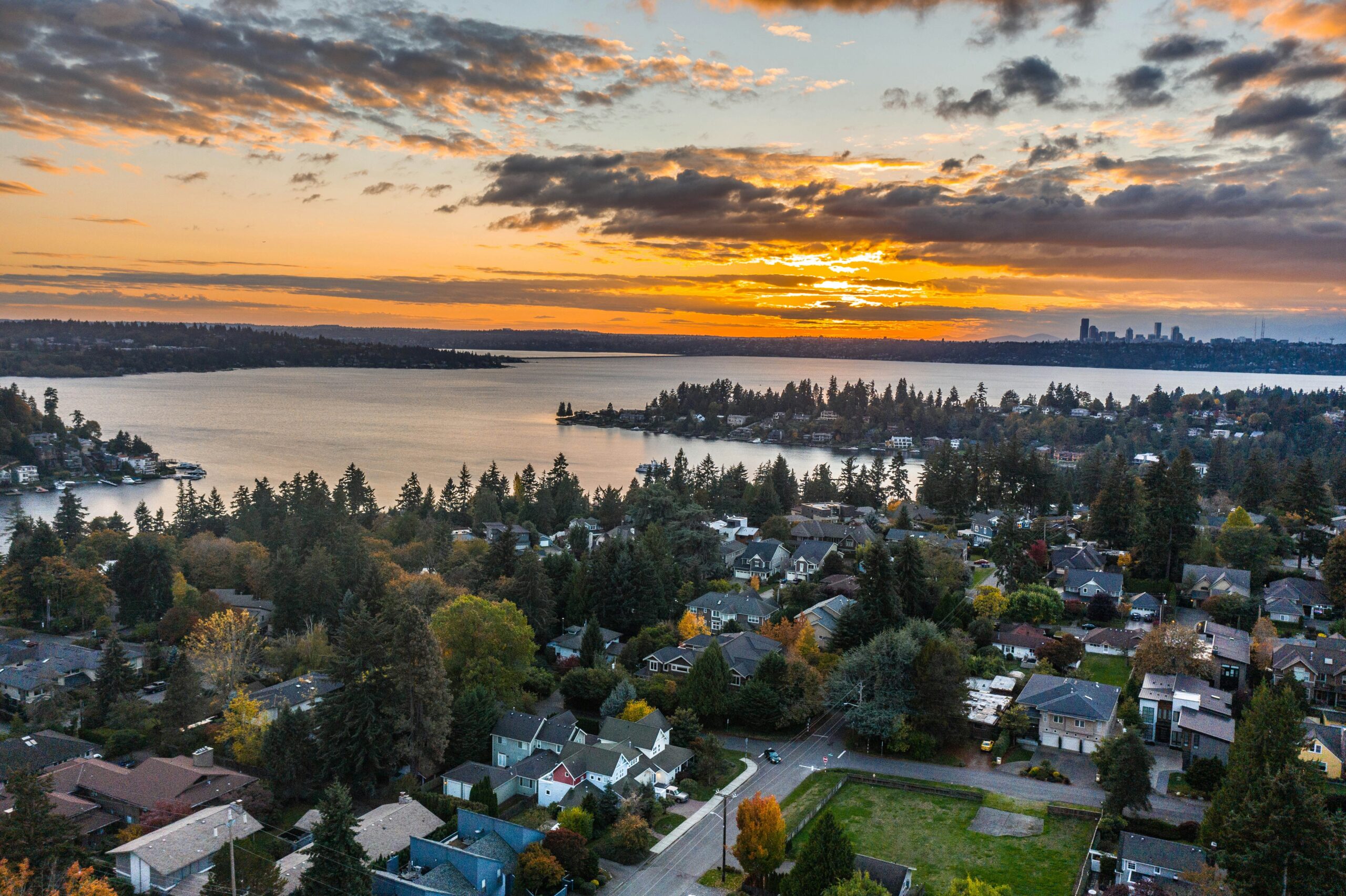
Washington State is one of the more active fix and flip markets in the country, with Seattle, Tacoma, Spokane, and the I-5 corridor offering strong demand, solid ARVs, and consistent inventory of older housing stock with value-add potential. Population growth, tech employment, and persistent housing undersupply across the state’s major metros give investors a meaningful tailwind that has proven durable across market cycles.
The trade-off is a statewide contractor registration regime that applies to everyone working for pay in construction, city-level permitting that reaches most meaningful remodels, and hard money lenders that cap total exposure at 70 to 75 percent of ARV with explicit profit tests and adjustments for rehab scope, credit, and team credentials. Here’s what to understand before you start.
Key Things to Know Before You Start
Washington is a registration state — every contractor working for pay must register with L&I. All contractors working in Washington must register with the Department of Labor and Industries as either general or specialty contractors before they advertise, bid, or perform construction work for compensation. Unregistered contractors face fines and lose the ability to sue to collect payment — a meaningful enforcement mechanism that buyers, lenders, and building departments take seriously.
General and specialty registrations are not interchangeable. General contractors may perform or subcontract most work and must register as general if they hire subcontractors. Specialty contractors can only perform work within their registered specialty and cannot subcontract to others. For fix and flip projects involving multiple trades — which describes virtually every meaningful rehab — you need a registered general contractor or must register as one yourself. Using specialty contractors to manage multi-trade scopes is a compliance problem, not just an administrative one.
Registration requires bond, insurance, and business setup — but no trade exam. To register as a general contractor, you need a Washington business license and UBI number, a $30,000 continuous surety bond naming L&I as certificate holder, and general liability insurance of at least $200,000 public liability and $50,000 property damage or $250,000 combined single limit. The registration form must be notarized and filed with a fee of roughly $141. Specialty contractor bonds run $15,000. Notably, Washington doesn’t require general contractors to pass a trade exam or document years of experience — the registration framework focuses on bonding, insurance, and business compliance. Separate state licenses for electricians, plumbers, and other regulated trades operate independently of the GC registration.
Permits are required for most construction beyond paint and flooring. Washington’s statewide guidance is consistent: most construction, alteration, or repair work requires a building permit. New residential and commercial structures, additions and major renovations, structural changes including load-bearing wall work, electrical, plumbing, and mechanical work, roof replacements, window and door replacements, siding, decks, porches, and accessory structures all require permits. The list of genuinely exempt work — cosmetic updates like painting and flooring — is short and doesn’t cover most of what a meaningful fix and flip involves.
Local permit requirements are detailed and reach further than investors often expect. Bellevue’s Single-Family Remodel Permit covers any structural change within an existing dwelling that doesn’t increase area, plus conversions of unconditioned to conditioned space and ADU creation — and it bundles electrical, mechanical, and plumbing into the same permit. Vancouver requires permits for adding or removing walls, converting basements, attics, and garages to living space, changing footprints, adding second stories, and sheathing repair and replacement. These aren’t edge cases — they describe standard fix and flip scopes.
Hard money caps total exposure at 70 to 75 percent of ARV and requires minimum profit tests. Washington lenders size loans against ARV with LTARV caps in the 70 to 75 percent range. But Washington’s lending environment adds an explicit layer that many other states don’t: minimum 30 percent projected gross margin and $15,000 projected profit for flip exits. For rental and refinance exits, minimum DSCR of 1.1 after repairs is required. Deals that don’t meet these profitability thresholds don’t get funded regardless of how the LTC math looks.
Licensed local team members directly improve your leverage terms. Washington’s adjustment matrix is explicit: credit scores below 720 reduce available leverage by 5 percent, full gut rehabs reduce it by 5 percent, and entering a new Washington market reduces it by another 5 percent. Having a licensed Washington Realtor adds up to 5 percent, and a licensed Washington GC adds up to 10 percent. The difference between a penalized scenario and a fully supported one is meaningful — building a credentialed local team is a direct financing lever, not just good execution practice.
Permits, Inspections, and Timelines
Washington building departments review plans for compliance with the Washington State Building Code and local zoning, with permits increasingly submitted and tracked digitally. After issuance, inspections occur at standard milestones — footing and foundation, framing and rough-in for MEP trades, insulation, and final — and all work must match approved plans. Failing to obtain permits and pass inspections can result in fines, forced tear-outs, or sale delays.
The scope of permit-required work across Washington cities is consistent and broad. Removing load-bearing walls, converting garages or basements to living space, changing footprints, adding stories, upgrading electrical panels, replacing windows where framing is affected, and replacing roofing and siding all require permits across jurisdictions from Bellevue to Vancouver to Spokane. Treating those scopes as cosmetic work is a reliable path to enforcement problems.
In Seattle and other high-volume markets, permit review backlogs can meaningfully affect project timelines. Investors who model same-week permits without buffer for plan review, corrections, and re-inspection scheduling consistently encounter schedule pressure on short-term loans. Building several weeks of buffer into loan term assumptions is standard practice for experienced Washington investors.
Partnering with a draw-friendly lender, like the ones found on Lenderly, ensures you have access to secure and timely remote virtual inspections, effectively eliminating many of these issues.
Working With Contractors
L&I registration verification is the starting point for every contractor relationship in Washington. Before signing with any GC or specialty subcontractor, verify L&I registration status and confirm the registration type matches the actual scope of work — general for multi-trade projects, specialty only for single-trade scopes where no subcontracting is involved. Confirm current bond and insurance certificates, and make sure the registered entity matches what appears on permit applications and contracts.
For specialty trade subcontractors — electricians, plumbers, HVAC — verify their separate state trade licenses in addition to L&I registration. Homeowners can often perform work on their own residences without registering, but investor-held properties in LLCs don’t qualify for that exemption and are expected to use registered contractors.
Milestone-based payment schedules tied to passed inspections rather than calendar dates are standard. The L&I registration system is publicly searchable, making contractor verification fast — there’s no good reason to skip it, and buyers and lenders routinely check registration status during due diligence.
Financing Your Project
Washington has a deep and fast-moving hard money market. Rates start around 10.5 percent with programs funding up to 90 percent of purchase price and 100 percent of rehab costs on qualifying deals. A Seattle Ballard example shows an 85 percent LTC deal funded and closed in 14 days. Large-market loans in the $867,000 range have been funded in days with local underwriting. Terms run 6 to 18 or 12 to 24 months, interest-only, with entity-only borrowing requirements and minimum FICO thresholds around 660 to 680.
The governing constraints are ARV-based: 70 to 75 percent LTARV caps total deal size regardless of LTC marketing. The profit tests — 30 percent gross margin and $15,000 minimum profit for flips — operate independently and add a layer of underwriting discipline that other states don’t apply as explicitly. Initial advances are based on the lower of purchase price or as-is appraised value, with construction holdbacks released via draw requests after verified progress.
Highly qualified borrowers can reach up to 85 percent loan-to-full-cost on an exception basis, but 70 to 75 percent LTARV remains the standard ceiling. DSCR rental products are available for hold strategies, with underwriting based on post-renovation cash flow rather than personal income.
Common Mistakes to Avoid
Assuming no license is required because Washington doesn’t mandate a trade exam for GC registration is the most persistent misconception in this market. The L&I registration requirement — with its bond, insurance, and business compliance components — applies to every contractor working for pay. Unregistered contractors can’t enforce their contracts in Washington courts, which affects investors as much as it affects contractors when disputes arise.
Using specialty contractors for multi-trade project management is a structural compliance problem. Specialty contractors cannot subcontract work and can only operate within their specific registered specialty. Any project involving multiple trades needs a registered general contractor. Skipping permits on the structural and system work that Washington’s statewide and city-level guidance explicitly covers — load-bearing wall changes, garage and basement conversions, electrical and plumbing upgrades — produces forced tear-outs and sale delays that are entirely avoidable.
Over-leveraging based on LTC marketing without confirming both the 70 to 75 percent ARV cap and the 30 percent gross margin and $15,000 profit requirements govern deal eligibility, and failing to build a licensed local team that captures the positive leverage adjustments — leaving as much as 15 percentage points of leverage on the table — are the consistent ways Washington investors underperform what the market actually supports.
The Bottom Line
Washington State rewards fix and flip investors who treat L&I registration, building permit requirements, and ARV- and profit-driven hard money underwriting as core operating constraints. The demand fundamentals across Seattle, Tacoma, Spokane, and the I-5 corridor are among the strongest in the country, and the hard money market is deep, fast, and well-suited to active investors.
Verify L&I registration and confirm it matches your project’s scope before signing with any contractor, treat permits as critical path items rather than administrative overhead, and build your capital stack around the actual ARV caps and profit tests that govern Washington lending. Build a team with licensed local professionals — the leverage improvement is real and compounds over multiple projects. With those disciplines in place, Washington delivers the volume and velocity to support a serious, scalable investment operation.